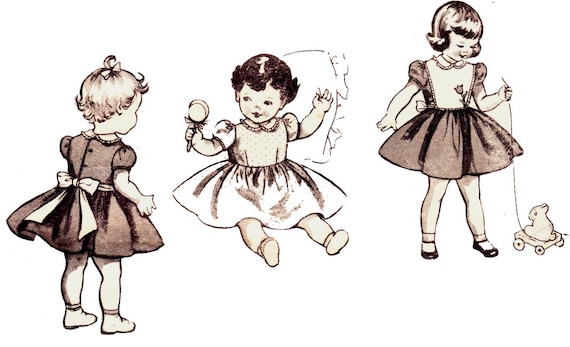
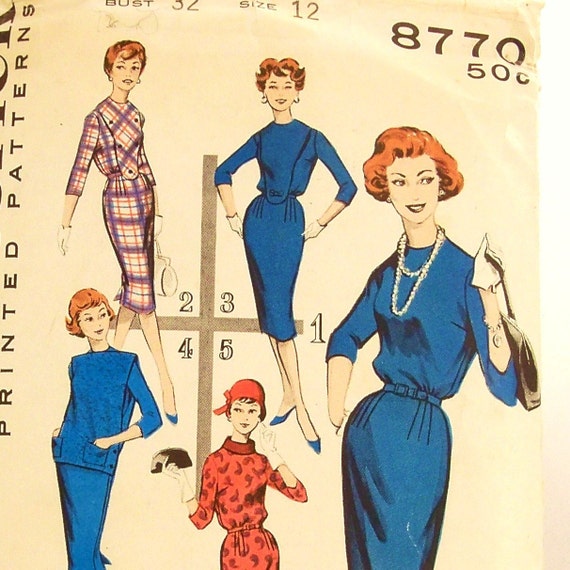
Showing posts with label vintage dress pattern. Show all posts

Tuesday, December 16, 2014

Focus On: Butterick Young Designers: Mary Quant

By Sherri, sewbettyanddot

When we think of designer sewing patterns, many of us probably immediately think of Vogue: Vogue began to publish named designer patterns around 1949. Stay tuned for more blog posts about Vogue designers! The other pattern companies also created designer pattern lines, and in this post we'll start with Butterick.

Butterick began its Young Designer series of patterns in 1964 in an effort to appeal to a more youthful seamstress, and Mary Quant was a natural choice to begin the series. Quant was born in England in 1934 and graduated from Goldsmith's College, London, with a degree in Art Education. She began her career in fashion as an apprentice to a milliner whose shop was located next to the venerable Claridge's Hotel. In 1955--at the age of 21--she opened a shop called Bazaar on the King's Road in the bohemian Chelsea neighborhood in London; a second branch followed in 1957. Mary Quant was in the forefront in making London, for the very first time, a fashion capital.

Her youthfulness meant that she identified closely with her customers. With the success of several garments she designed and made, she decided to focus on her own clothing line. Quant's idea was that women and girls without a big budget should still be able to look hip and chic, and she also believed that clothes should be simple and easy to move in. Her shops were the place to be: she was friends with Vidal Sassoon (she sported his iconic five-point bob) and the Beatles (Pattie Boyd married George Harrison in a Quant mini). According to the London Guardian, "Quant was responsible for hot pants, the Lolita look, the slip dress, PVC raincoats, smoky eyes and sleek bob haircuts...."

Left to right: Vidal Sassoon cutting Mary Quant's hair (courtesy classicenglishstyle.com);
The second branch of Bazaar, on Brompton Road (courtesy queensofvintage.com); 
Pattie Boyd with the Rolling Stones (wearing a version of the dress in Butterick 3287!) (courtesy glamouragogo.blogspot.com); 
A 1960s Mary Quant ad (courtesy glamouragogo.blogspot.com).

She is, of course, one of the designers often credited with "inventing" the miniskirt (along with French designer André Courrèges) in the early 1960s. She claimed that it was her customers who were responsible for the garment: they kept insisting that she make their skirts shorter and shorter and shorter. She has said, too, that she was influenced by ballet costumes, both in terms of short skirts/dresses AND the tights that went under them. Whether or not she invented it, Quant definitely popularized the miniskirt--and some sources say that she named it the Mini after her favorite car (she designed a special edition Mini car in 1988, complete with her signature daisy motif). In the late 1960s Mary Quant made hot pants ubiquitous and popular, as well as colored tights and color-blocked a-line dresses, and her make-up line was wildly successful (spider lashes, smoky eyeshadow, and pale lips were all part of the Quant look). The two models who are most associated with Mary Quant are Jean Shrimpton and of course, Twiggy!

Top row: models wearing Mary Quant designs (courtesy u1010026.wordpress.com)
Twiggy wearing a Quant design (courtesy strawberrylemonade.blogspot.com)
Bottom row: A Mary Quant Daisy doll (courtesy Wikipedia)
Mary Quant with images of Royal Mail stamps featuring her and the Mini automobile, ca. 2009 (courtesy excoboard.com)

Quant sold/licensed her designs to J. C. Penney in the early 1960s, allowing her clothes to be mass produced and introduced to the American market. She designed tights, make-up, and accessories as well, and there was even a Mary Quant Daisy fashion doll. In 1966 she was made an Officer of the Most Excellent Order of the British Empire (OBE) and received the honor from Queen Elizabeth wearing a blue jersey miniskirt. Mary Quant is now 80 years old.

Top row: Mary Quant receiving her OBE award at Buckingham Palace in 1966
Quant fashions in J.C. Penney catalogue
Middle row: J.C. Penney catalogue
Mary Quant makeup advertisement
Tights by Mary Quant
Bottom row: An ad for Quant dresses
Fashions for Mary Quant's Daisy doll
A toaster designed by Mary Quant
(all image courtesy tumblr.com)

Given all of the above, I'd say that Butterick definitely had their finger on the pulse of youthful fashion when they chose Mary Quant as their first Young Designer!

Now let's look at some Butterick Mary Quant patterns from members of the Pattern Patter team!

Top row: Butterick 3505: Fragolina


(Text sources: Wikipedia; vam.ac.uk.com; biography.com; dailymail.co.uk)

Which Mary Quant pattern makes gets your motor revving? Tell us in the comments!

Monday, September 29, 2014

Focus On: Shift Dresses

By Sherri, sewbettyanddot

Question: what is easy to wear, comfortable, versatile, and cute? Answer: a shift dress!

Shifts as we commonly refer to them today are, in essence, a columnar-shaped dress with no defined waist. They can be mini or to the knee. They are most typically sleeveless, but there are definitely shifts with sleeves. Compare this shape to the sheath dress (the two are often confused: the sheath hugs the body while the shift does not).

When I began researching this post, I thought it would be easy since shift dresses are, well, "easy." The history of the shift and its development into the garment we know today is actually rather complicated--and fascinating.

It all goes back to the chemise, a plain, straight garment, usually of a lightweight fabric such as muslin. Chemises were the primary undergarment worn in the eighteenth (and part of the nineteenth) century. They were worn next to the skin and so absorbed sweat and body oils; they could be easily laundered (well, as "easy" as doing laundry was in the days before wash machines and running water!) while elaborate dresses adorned with trims and jewels could not. Marie Antoinette--always a risk taker--briefly popularized a garment called la gaulle, which consisted of light and airy unconstructed (for the most part) layers of muslin. Please remember that upper-class women typically wore dresses with very tight torsos with panniers over the hips and voluminous skirts. Fashionable ladies of course followed suit, but the French people were scandalized: they felt the dress looked like a chemise, and they were horrified that their queen would wear her underwear in public (Queen Marie was already not at all popular with the general public due to her somewhat eccentric ways and her quest to find some simplicity away from the over-the-top atmosphere at the French court). The garment became known as a chemise à la reine (the queen's chemise).
1. Chemise (3rd quarter 18th century, France). Collection The Costume Institute, The Metropolitan Museum of Art, New York. Gift of Mrs. Dudley Wadsworth, 1941
2. Marie-Antoinette en chemise, Louise Élisabeth Vigée Le Brun, 1783 (courtesy Wikipedia)

3. Neoclassical (empire style) dress, worn by Felicité-Louise-Julie-Constance de Durfort, portrait by Merry-Joseph Blondel 
(courtesy Wikipedia)

The end of the eighteenth century saw a Neoclassical revival in art and fashion, and women turned to tunic-shaped dresses (as seen on women painted on Greek and Roman pottery) that were fitted at the bust and fell straight with no waist constriction. The style was popularized by Empress Josephine, so the English began to call this an "empire silhouette." In the Regency period in England (first decades of the nineteenth century--think Jane Austen) this style of dress was often made of white or light-colored fabric, which denoted a higher economic class as only ladies of leisure could keep a white dress clean. As fashion is always changing, this silhouette fell out of style for about 100 years...but in the 1920s, enter the flapper. The long, straight dress with very little waist definition (and less restrictive undergarments--good-bye corsets!) was again en vogue. Not only was this style easy to wear, but it also signified the wider freedoms women began to enjoy, including the right to vote (the 19th Amendment was passed in the U.S. in 1920; New Zealand and Australia were early adopters, passing universal suffrage laws in the late 19th century).
1. Dress (1805-1810), probably British. Collection The Costume Institute, The Metropolitan Museum of Art, New York
2. Dress (1924), United States. Brooklyn Museum Costume Collection at The Metropolitan Museum of Art, Gift of the Brooklyn Museum, 2009; Gift of Mrs. Fred May, 1957
3. Silk sacque-back dress, 1956, Saks Fifth Avenue. Brooklyn Museum Costume Collection at The Metropolitan Museum of Art, Gift of the Brooklyn Museum, 2009; Gift of Louise K. McGann, 1977


Sack dresses available in a Sears catalog--note that they are called chemises, harking back to the beginning! 
Ad from a Sears catalog, late 1950s. From Shih, Joy. Fashionable Clothing from the Sears Catalogs, Late 1950's (Schiffer Publishing, 1997); via plosin.com

As the Depression hit, the flapper lifestyle (and silhouette) faded away. After the privations of World War II, Christian Dior's exuberant New Look (tiny cinched waist--more constricting undergarments here--and enormous full skirts) was a sensation. Because every action has a reaction, designers then created a much simpler silhouette with the "sack dress," which, as its name implies, was a straight garment that hung from the shoulders with very little waist detailing (some of these dresses had a low belted back). Cristóbal Balenciaga is credited with the creation of this style in the late 1950s--the dress above (far right) is a knock-off from Saks. And on from this relaxed shape comes the shift as we know it, a child of the Youthquake and mod sixties. André Courrèges and Mary Quant were at the forefront of the mod shift dress revolution (both are credited with "inventing" the mini-dress). Finally, Lilly Pulitzer popularized the shape (and lovely colorful prints--the simple silhouette lends itself to prints and border prints) for suburban women everywhere; Jackie Kennedy was photographed in a Lilly and the rest was history. Shift dresses have never really gone out of style since the 1960s...they remain popular today, in part due to the variations within such a simple shape and the versatility they afford. 
1. Shift dress by André Courrèges (1960s). Courtesy FormidableMag.com
2. Mary Quant advertisement. Reblogged from TheCarnabetianArmy.tumblr.com
3. Lilly Pulitzer advertisement, early 1970s

Now, let's take a look at some lovely shift patterns from members of the Pattern Patter team on Etsy!
Top row, left to right: Simplicity 5918: MaddieModPatterns

Top row, left to right: Mary Quant: Butterick 3505: Fragolina
Top row, left to right: Vogue 6736: sydcam123

Shifts are so fab because they're very forgiving of any figure flaws AND they can easily transition from season to season: in the summer, all you need are some cute sandals and a shawl; in the fall, some tights and a sweater and you're on your way.

By the way, check out our Free Pattern Friday pattern to make a shift (check out all our Free Pattern Fridays, BTW!).

Which frock pattern would YOU shift for? Tell us in the comments!

(Main sources: Wikipedia, Victoria and Albert Museum [www.vam.ac.uk], The Metropolitan Museum of Art [www.metmuseum.org])

Thursday, December 26, 2013

FANCYWORK SELLER OF THE MONTH


Featured Seller: Fancywork


Hello, I'm Marjie. The snow is fluttering down here in Minnesota.  Last year we still had snow in May!  Living up here is a good excuse to have an extensive collection of vintage winter hats.  Hat patterns are my favorite kind of pattern to collect and sell right now.  They're hard to find and sought out.  I opened my Etsy store, Fancywork, in May of 2009. It’s evolution into a vintage pattern store happened gradually.  I started by selling vintage clothes and a few sewing patterns which sold quickly.  I found more patterns at a garage sale and my store began to take shape. 

I've always been a gleaner and have had hours of fun with friends rummaging through thrift stores. One year we gathered so many vintage 60's evening gowns that on New Year's Eve we had costume changes for each party we attended that night!  We brought suitcases and changed in the bathroom before we left for the next party.  We also had our hair done up circa 1966 by stylists who were old enough to remember how to do it right.  As time goes by it's getting harder and harder to find a fantastic vintage dress at a thrift store.  That's a good reason to learn to sew!
Vogue 5669 1940's


I'm in graduate school now as well as working as an art teacher.  Like most people, my life is much too busy.  Sewing is a way of slowing down and getting centered.  I find it can be meditative like making art.  I'm a    beginner seamstress and am gradually gaining courage to try more challenging sewing projects.  I often think of my sister when I sew.  I remember my older sister Rita sewing constantly when I was a little kid.  She had the foxiest teen wardrobe on the block.  She sewed passionately all of her life, making intricate quilts as well as clothes.  Rita passed away a few years ago.  For me being around sewing patterns is, in a small way, being with my sister.  

My mother showed me an old photo of her and my sister pointing out Rita's toddler bonnet and coat.  My Mom sewed the outfit out of my Dad's old Navy uniform.  That's such a sweet fact.  I'm glad she mentioned it to me.  It's cool to think that because sewing is becoming popular again, people might be sharing sweet sewing memories like this with their kids in the future.

All
Fancywork patterns are 10 percent off this month with the coupon code: 10Fancywork


Tuesday, September 10, 2013

Focus On: Buttons as Design Elements

By Sherri from sewbettyanddot

Button, button, who's got the button? Vintage pattern designers, that's who!

In today's post, I'm looking at buttons as design elements, not as the practical closures they are. Buttons were in fact first used as decorative items, not as ways to hold your clothes together. The earliest button found dates to about 5,000 years ago in what is now Pakistan, and it was, as you might expect, made out of  a shell. Buttons became status symbols in the Middle Ages, and they often were used--again, decoratively--to follow the curve of a body part (along an arm, up the back, etc.--and they still are: think of gorgeous wedding dresses with many many tiny buttons up the back of the dress, which are also suggestive of the pleasure of undoing of them!).

Poorer people had to make their own buttons, often carving them from bone or shell. Making buttons to sell, as piecework, was also a way to make money; this cottage industry continued until the Industrial Revolution. Dorset buttons, elaborate buttons made with thread, were a way for women, in particular, to support themselves. Again, the advent of mechanized button-making machines meant the demise of this handicraft (which is being revived today: here is a tutorial on how to make your own Dorset buttons).
(Button facts drawn from an article on Slate.com)

Vintage Dorset buttons (The Textile Society.org/UK).

Below are some lovely garments that use buttons as design elements (some are only decorative, some serve both practical and decorative purposes). Buttons were often used to create pleasing asymmetry, as well as to accentuate a scallop, a tab, the midriff...

I've only included adult garments...we'll look at children's clothing another time. And as for buttons themselves--vintage buttons are a whole world unto themselves.

 (Be sure to click on the image to enlarge it to see more detail.)


Images read left to right, top to bottom rows:
Top row
1. Simplicity 4701: PaneenJerez
2. Vogue 120: Anne8865 
3. Advance 9860: BlueTreeSewing  (the classic cheongsam)
Middle row
Bottom row


 Top row
Middle row 
2. (I liked this one so much, it's here twice--oops! See above)
Bottom row

Top row
1. Marian Martin R9053 (a button on/off capelet)
Middle row
Bottom row

Button loveliness galore! 

The Pearly Kings and Queens of London REALLY know how to use buttons as design elements (picture is blurry, but all of the white elements are mother-of-pearl buttons)!
(image from Wikipedia)


What do YOU think is cute as a button? Please tell us in the comments!
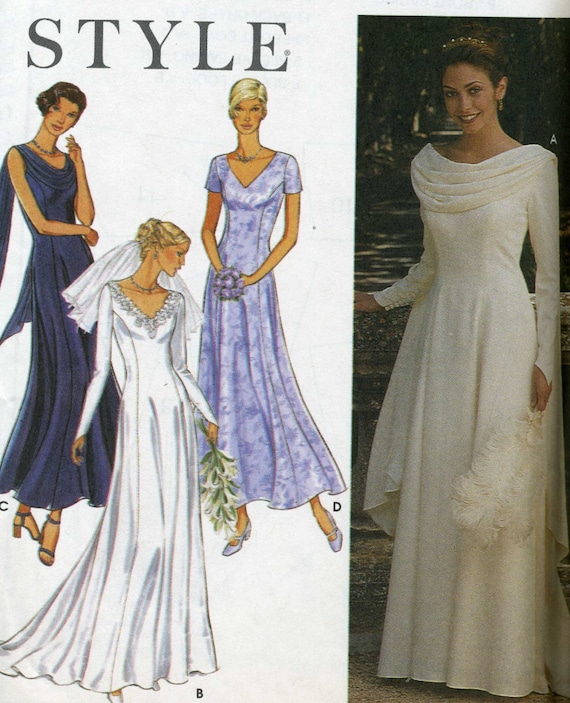
Tuesday, May 21, 2013

Princess Seams Refresher


by Anne from AnnesVintagePatterns

Ava loves everything Princess. My great-niece has seen all the Princess movies, loves books with Princess stories, and she has a wardrobe of Princess attire to rival Kate’s.  Oh, and did I mention she is 5 years old?  When she is older and begins learning to sew (plan afoot to encourage and help with this activity),  I’ll bet she won’t have a clue what it means when she sees a pattern describing princess seams.

1940s Dress Pattern Marion Martin Mail Order 9063 Vintage WWII Swing Era One Piece Day Dress with Princess Seams
Listing
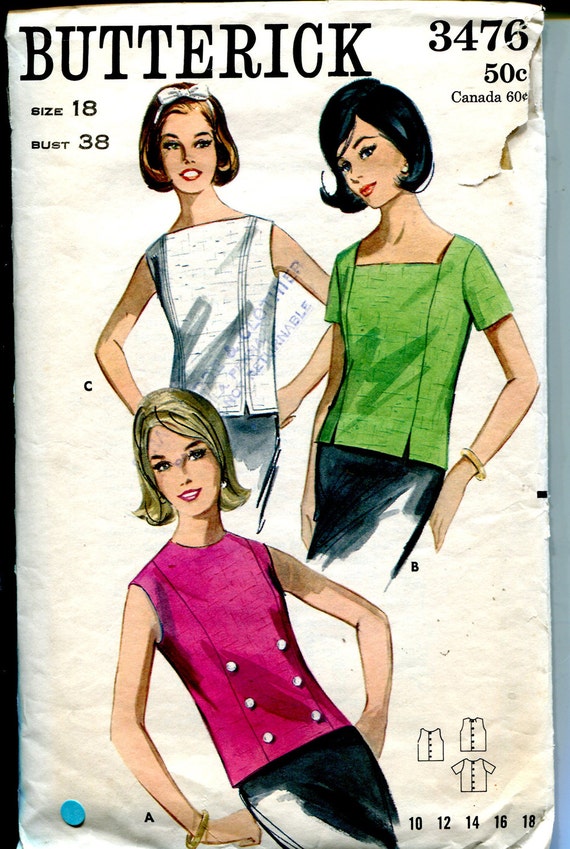
Princess seams are long, shaped seams sewn into clothing to add contouring or to tailor the fit to closely follow a woman's figure.  The princess seam style of dress needs no waistline, since it does its shaping without darts, by joining edges of different curvature.  The resulting princess seams typically goes from the shoulder (or under the arm) and curves gently over the bust point and down to the lower hem.  When princess seams are used on the front of a garment, they run over the line of the bust to create an even, smooth look.  This creates a slimming look, often seen in dresses with an A-line silhouette.  Many form fitting garments, such as formal gowns, are made with this type of seaming.  On slender women, princess seams can be used to highlight the figure and provide the illusion of curves. Princess seams emphasize a thin waist for women with hourglass figures.  Princess seams can be adjusted for fluffier women like me to fit an ample bosom and hips.

Here are some PatternPatter team members’ patterns featuring princess seams.
Simplicity 9162 UNCUT  Style Wedding Dress and Bridemaid Dress Sewing Pattern SIZE 8-18
Listing
1950s Sundress Pattern Simplicity 3522 Misses Summer Day or Evening Dress Fitted Blouse and Jumper Womens Vintage Sewing Pattern Bust 32
Listing
60s Misses Blouse Sewing Pattern Back Button Princess Seam  Square Jewel Neck  Top 38 Bust Size 18 Butterick 3476
Listing
Do you enjoy sewing with princess seams?

Tuesday, April 30, 2013

The Walk Away Dress and Its Descendents


By PrettyPatternShop

America after World War II was the land of Peace and Prosperity. It was a time of optimism and celebration. The drudgery of rationing, the misery of the Great Depression, these things were all fading memories and we lived in a land of atomic energy where anything was possible. We no longer wanted to be stuck slaving at our tasks just to provide the basic necessities. And women didn’t want to spend hours over their sewing, not when there were so many other things to do!

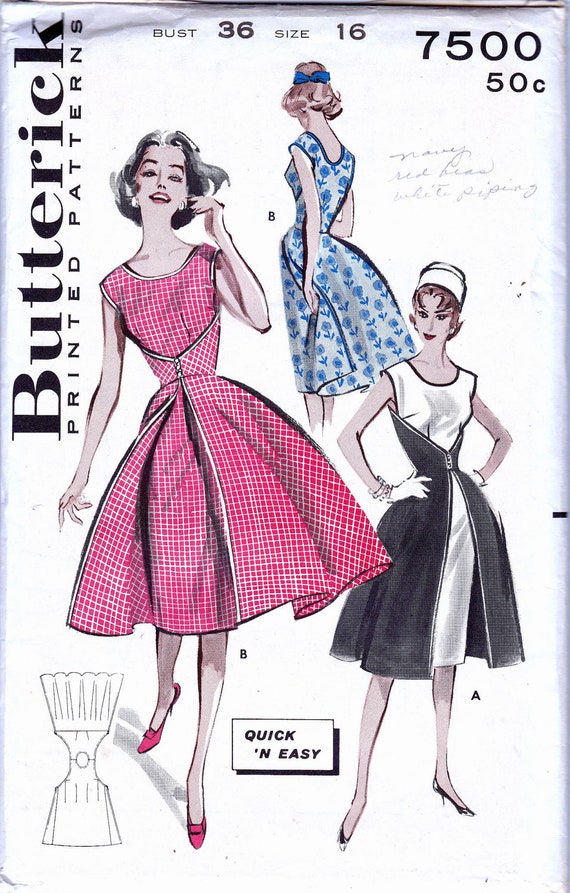
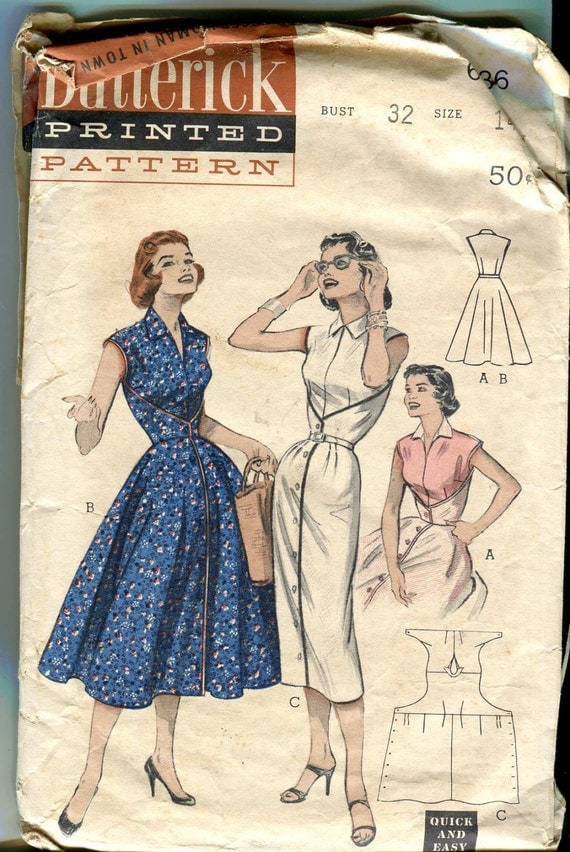
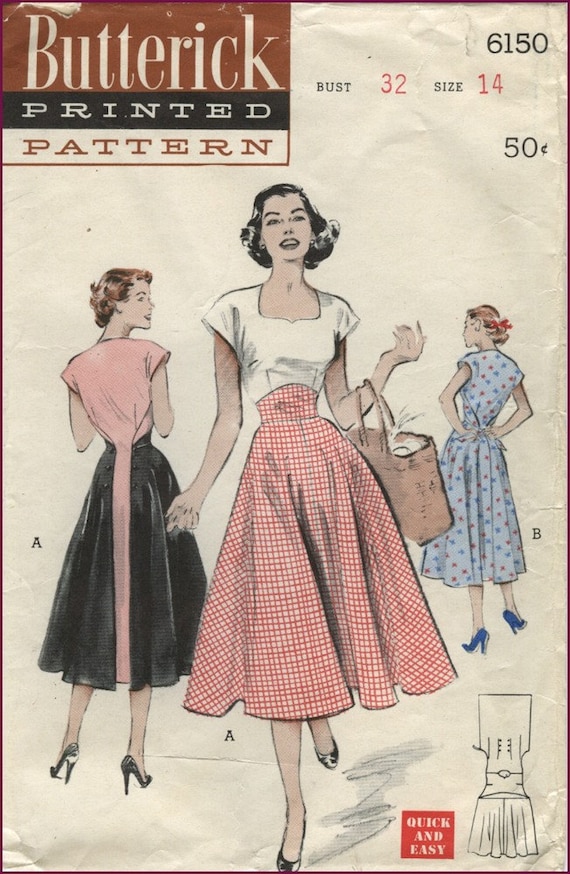
And so began the new era of easy to make, easy to wear, easy on the eye fashion. One of the most memorable and notable styles to emerge from that time was the Walk Away Dress, released by Butterick in 1952. “Cut it out at 9:00, wear it out at noon,” was the slogan. In other words, a project you could walk away from three hours later with a seriously cute finished dress.
It was enormously popular and saw a second printing:
60s Vintage Walk Away Dress pattern Butterick 7500 Sze 16 Bust 36 UNCUT FF
source
And let’s not forget its cousins:
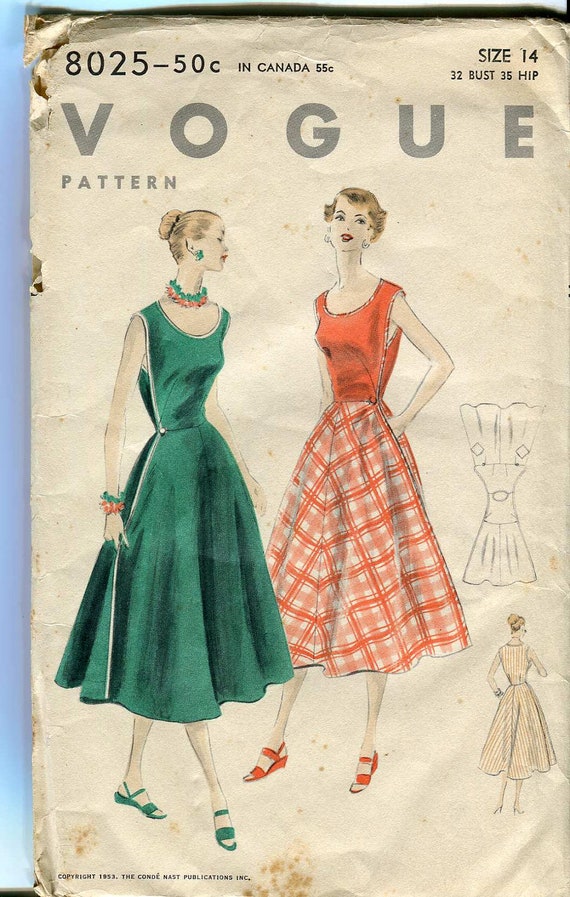
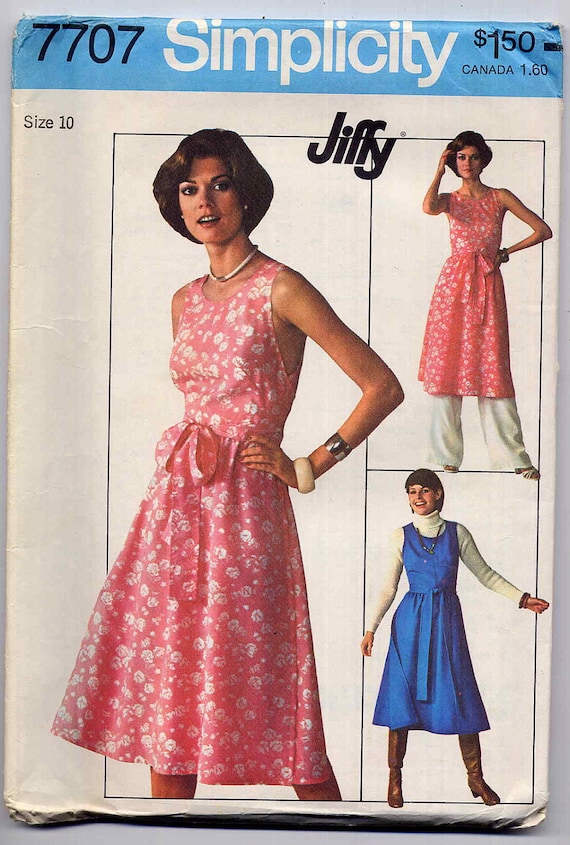
The clever wraparound style would endure for decades, changing very little in basic construction,


Butterick 5368 The Easy Whirl Away Dress
60s Version source
Vintage 70's Jiffy Whirl Away Style Wrap Dress Sewing Pattern Simplicity 7707--Bust 32.5
70s Wrap Around Style
Gertie's Post on the Modern Version

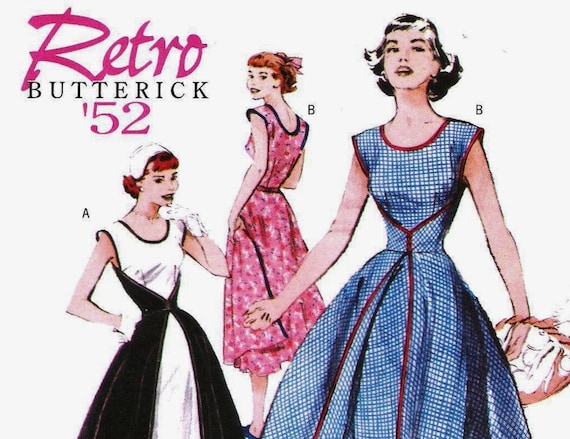
And then the Walk Away was rereleased in 2006 as part of Butterick’s Retro line:
1950s Wrap Dress Pattern Butterick 4790 (Womens sizes 16-18-20-22)
source

This dress endures in popularity, inspiring sew-alongs, tutorials and reviews.
1950s-dress-sewalong-button
source

Make it quick, make it easy, make it cute!

Tuesday, April 9, 2013

Plastron Anyone?

By Anne from AnnesVintagePatterns

I guess you really can teach an old dog a new trick. I have been sewing for over 45 years, and never once did I run across the word “plastron”.  How I avoided it all these years I’ll never know.

Here are some definitions in case you are not familiar with plastrons either.

1. A metal breastplate worn under a coat of mail.
2. A quilted pad worn by fencers to protect the torso and side.
3. A trimming on the front of a bodice.
4. The front of a man's dress shirt.
5. The front panel of the tunic of a uniform, usually of a different color than the rest.
6. Zoology The ventral part of the shell of a turtle or tortoise.

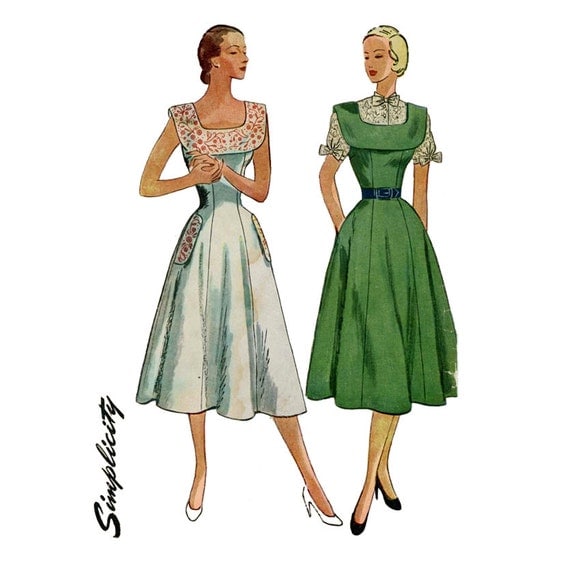
I guess I always called a plastron on a pattern by other words…..bib, smock, apron…you get the picture. Here are some of my PatternPatter team members’ patterns with a plastron. Try saying THAT quickly 3 times in a row!
1960s Sewing Pattern Simplicity 3594: Juniors Belted Dress Pattern, Mid Century Fashion, Size 15 Bust 35, 1960 Uncut, Factory Folded, P-1132
Green Plastron from TheBeetlesNeedles
White Plastron from PatternShop
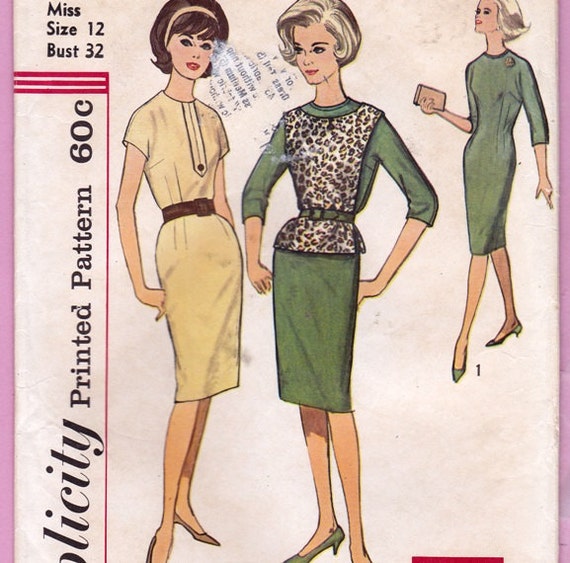
Simplicity 4616 Juniors' & Misses' One Piece Dress with Plastron (Front Panel) Kimono Sleeves Sz 12 UNCUT Pattern- 2
Oooh a Leopard Plastron from RosesPatternTreasury
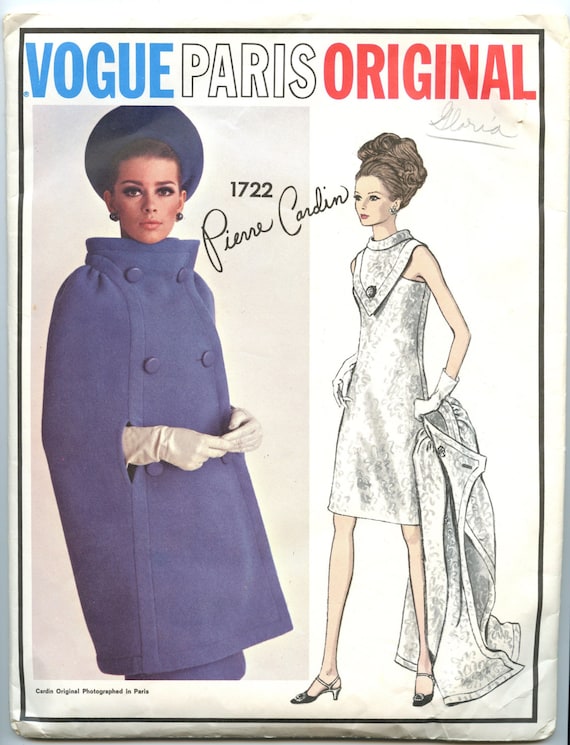
1960s Vintage Vogue Paris Original 1722 Pattern by Pierre Cardin Dramatic Evening Dress and Double Breasted Cape Includes LABEL Bust 32
 Classy White Plastron GreyDogVintage


50s Vintage Toddler Girls sewing pattern Party Dress Butterick 6597 Size 2 Breast 21 Inches
Sweet Tulip Plastron from allthepreciousthings

Vintage 1960s Dress Pattern Butterick 8770 Size 12 Bust 32 Collar Variations
Plaid Plastron from Revvie1